Portuguese Tumbler
The Portuguese Tumbler was developed, of course, in Portugal around 1900, As with all domesticated pigeons, it is derived from the Rock Dove (Columba Livia), being further developed using selective breeding techniques. Its most impressive deviation from the Rock Dove is its form and style of flight, flying high in tight circles.
History
The breed was developed from English Short-Faced tumblers and Tipplers, accounting for their flying style. An official standard was adopted in 1926, recognizing that the breed had diverged significantly from its foundation stocks. The original standard stood unaltered until 1953. At that time, the breed was most popular in the Lisbon area, but has moved to Coruche where the national exhibitions have been held since 1980. The breed has become a show breed since that time and is now known more for its form than flying style. |
 |
Description
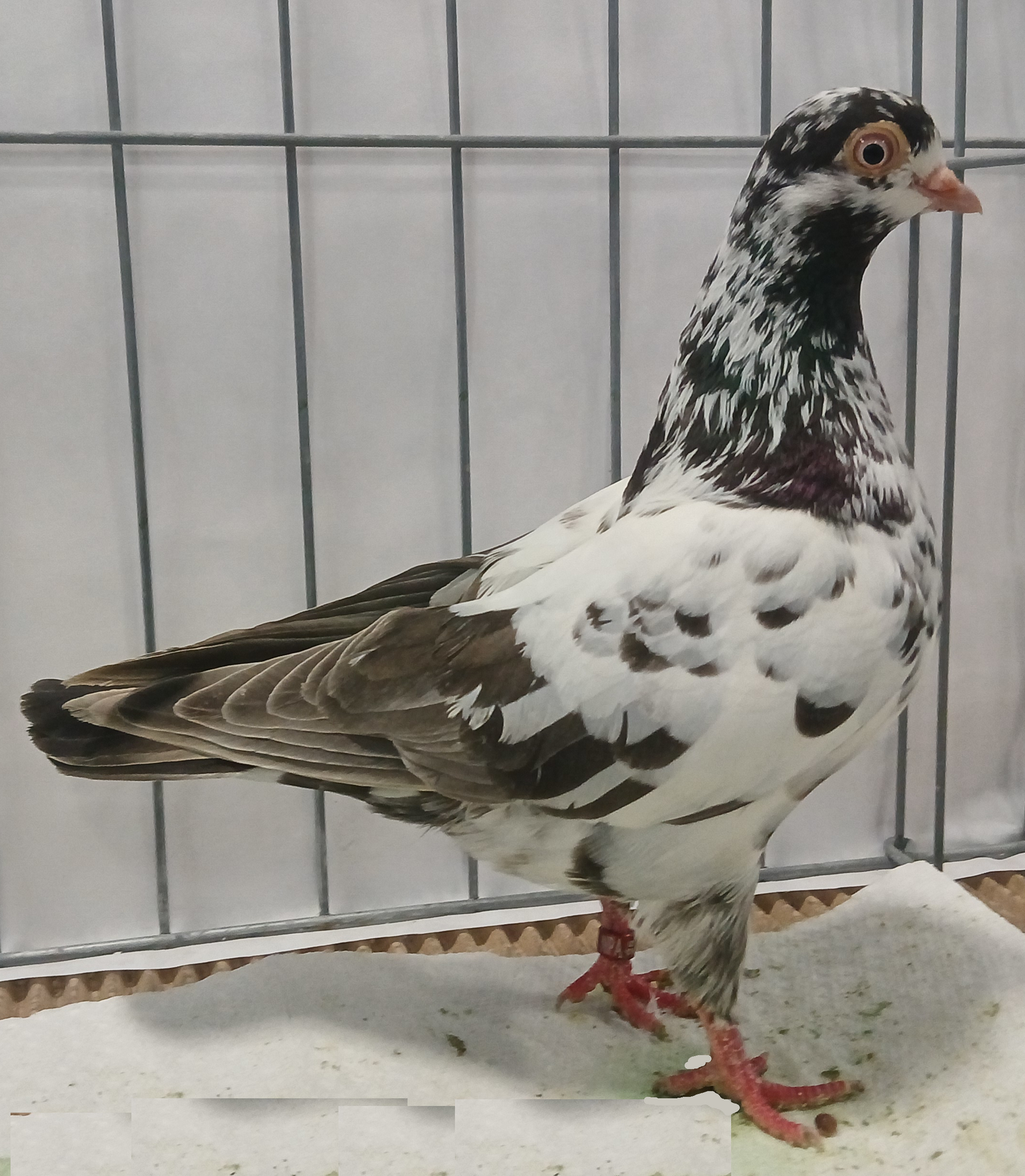
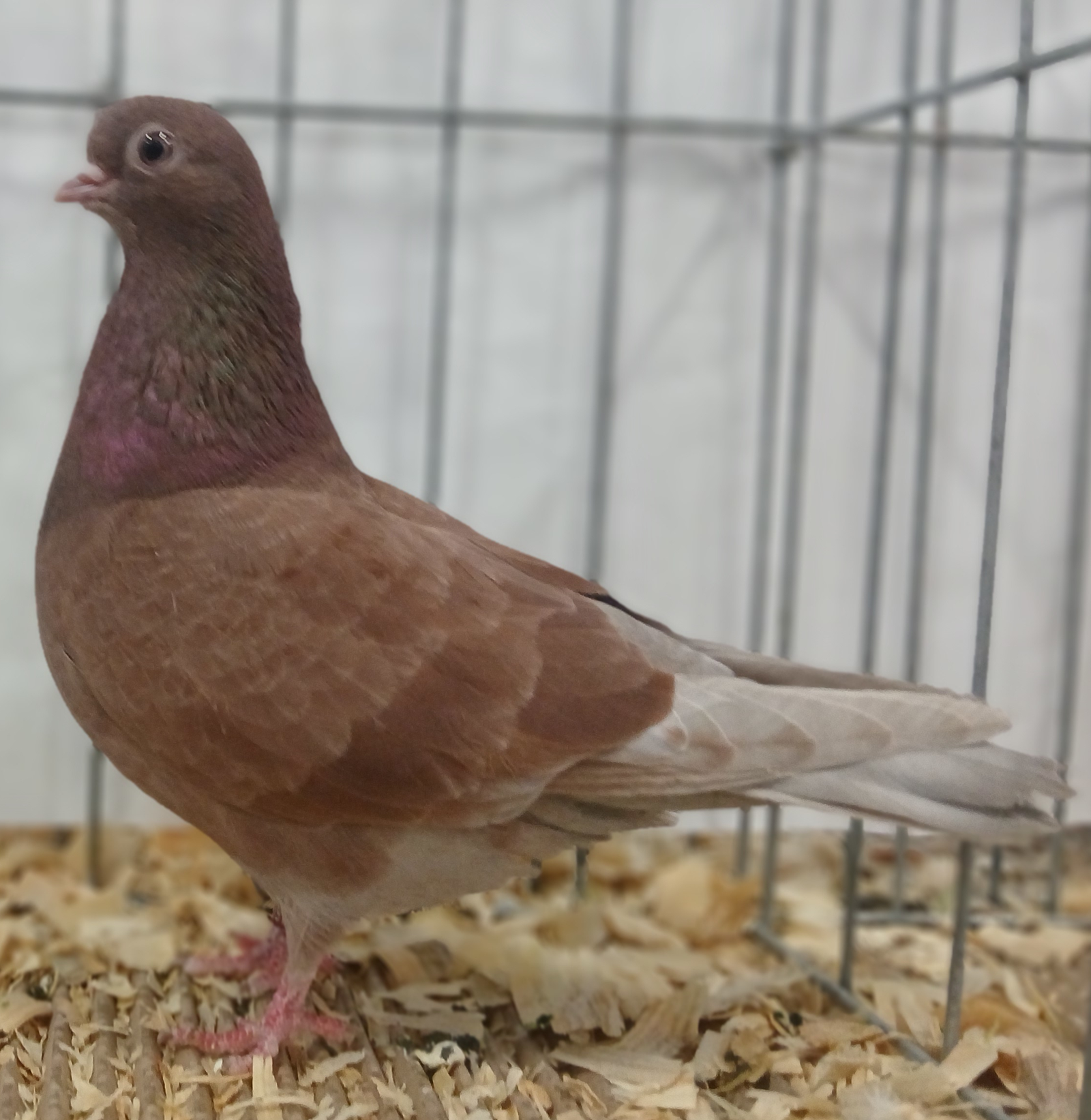
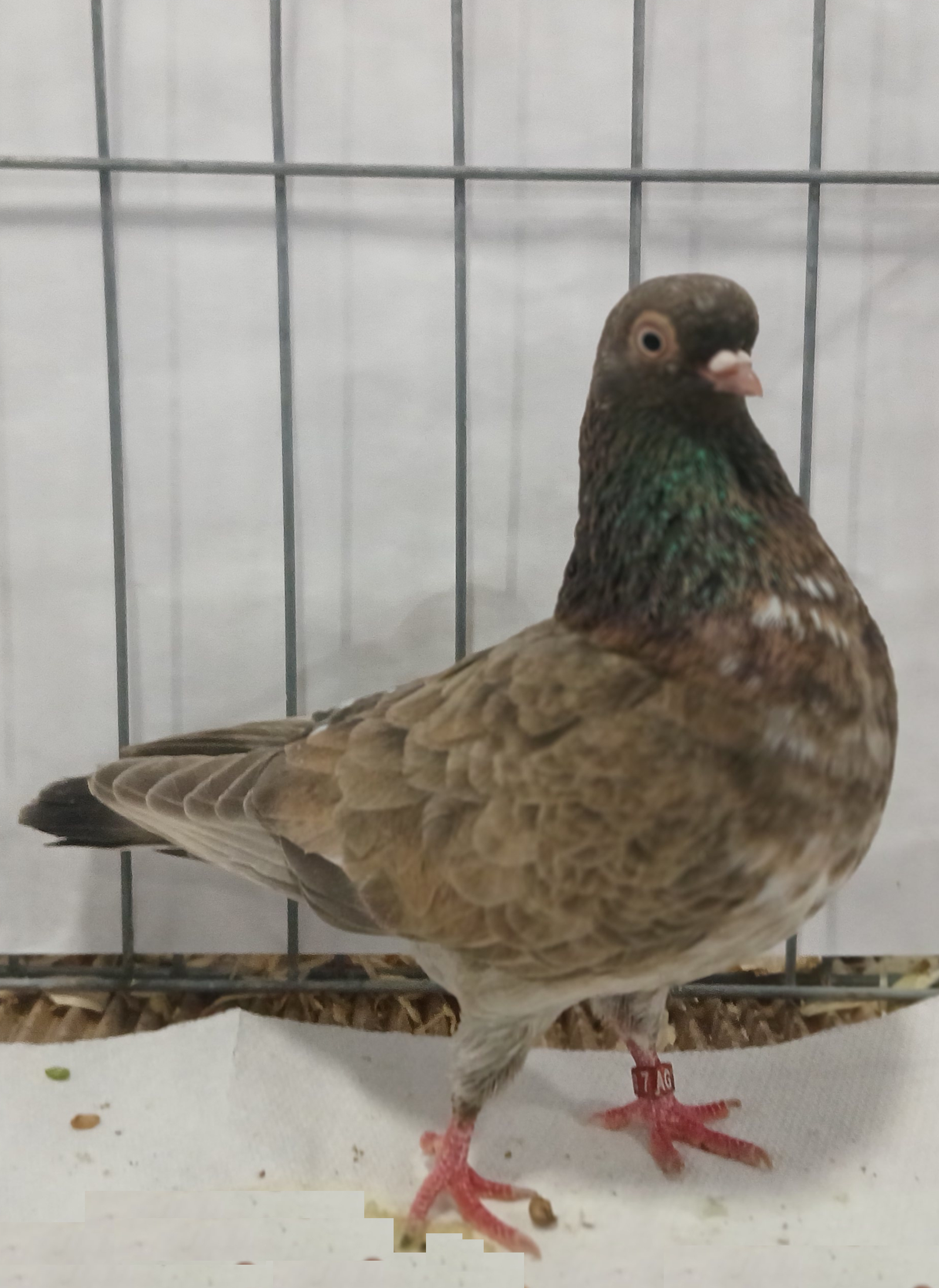
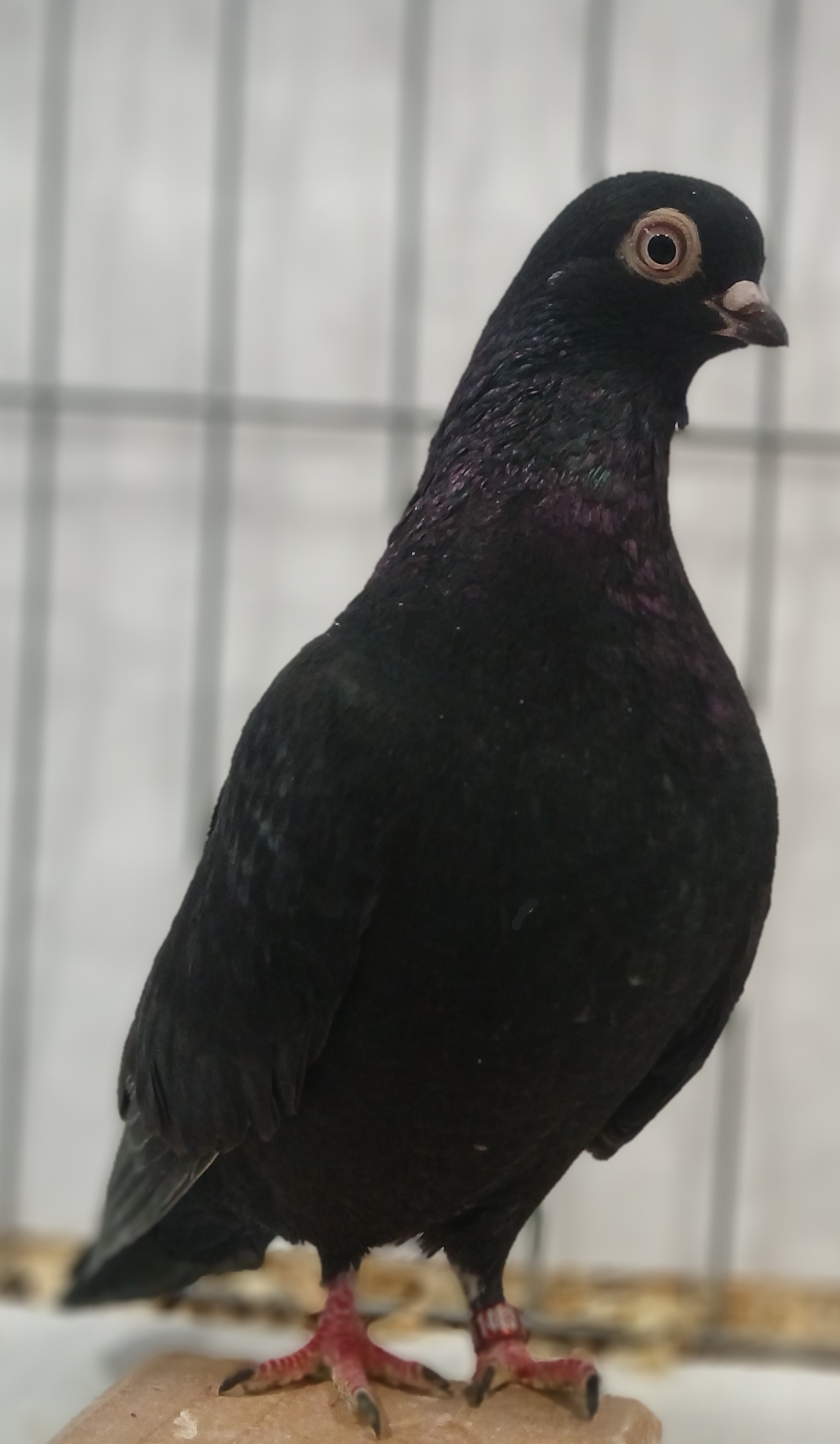
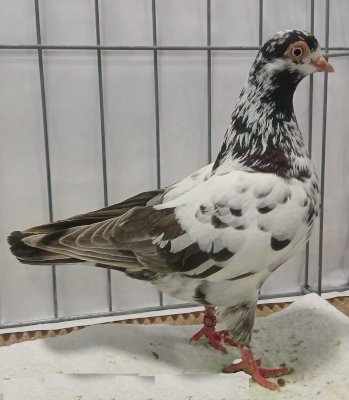
The Portuguese Tumbler is a small, short-bodied pigeon (4)with a low-slung stance and an upright posture. Its length from beak to tail tip is approximately 10 inces (25 centimeters). Adult cocks weigh between 7 and 9 onces (200 to 250 grams); hens and young cocks are lighter, with young hens weighing about an once less. They have a fine, nearly horizontal beak, pearl eyes, small eye ceres and narrow eye rings, and cube-like head shape (with rounded edges), The wings are carried on the tail, ending just before the tip of the tail. There are 12 tail feathers, that are held tightly, appearing to be only one and a half feathers wide These Tumblers are renowned for their wide array of color and marking, including rather unusual combinations rarely found in other Tumbler breeds. The colors are found in solid as well as bicolored and even tricolored mixes. Particularly noteworthy are the birds with variations of bronze plumage.
Distribution
The breed is now seen in may parts of the world and recognized by the European Association as breed # 921. By 1997 nearly 270 were exhibited in Germany It is recognized in Great Britain and the United States by each country's National Pigeon Association. It was initially imported into America in 2003, and by 2020, 123 were exhibited at a major show |
References
1 Geflügel-Börse 1994 # 22
2 EE-List of the breeds of fancy pigeons: ELFP : European Association of Poultry-, Pigeon- and Rabbit breeders
(Entente Européenne d’ Áviculture et de Cuniculture
3 Book of Standards; National Pigeon Association 2023; Tumbler, Roller & High Flyer Pigeons: Portuguese Tumbler
4 Geflügel-Börse 1999 # 6 : From the Cambalhota Portuguesa to the Portuguese Tumbler R. de Koster
5 PORTUGUESE TUMBLER; Joe Powers Purebred Pigeon 1925 #4
6 Purebred Pigeon 2020 #5 Portuguese Tumbler Club's 15th Anniversay, Keven Moths
7 Purebred Pigeon 2021 #2 Portuguese Tumblers, Keven Moths
8 Purebred Pigeon (Portuguese Tumbler Special) 2024 #2
|